By Climbit.uk — Experts in Safe Access Equipment and Industrial Work Platforms
In any warehouse, distribution centre, or industrial facility, efficiency and safety are two sides of the same coin. The right access equipment not only makes daily operations smoother but also protects your staff from unnecessary risks. One of the most critical tools in this equation is the humble warehouse step — a piece of equipment that is often underestimated until something goes wrong.
Selecting the right type of warehouse steps can dramatically improve workflow, reduce downtime, and ensure your site remains compliant with UK health and safety standards such as the Work at Height Regulations 2005 and BS EN 131. With so many options available — from mobile steps and fixed platforms to podium steps and narrow-aisle designs — it can be difficult to know which solution best suits your specific environment.
At Climbit.uk, we’ve spent years supplying access solutions to warehouses, manufacturing plants, and logistics companies across the UK. In this guide, we’ll explore everything you need to know to make an informed decision — including materials, safety standards, and how different designs affect performance, cost, and long-term usability.
Before choosing any equipment, it’s essential to understand your working environment. Every warehouse is different, and factors such as floor conditions, storage height, space layout, and frequency of use can have a direct impact on what kind of steps you should be using.
If your warehouse has frequently changing layouts, for example, a mobile warehouse step may be more suitable because it can easily be moved to different areas as needed. These are particularly popular in e-commerce and distribution hubs, where flexibility is essential and tasks change from hour to hour.
On the other hand, if you operate in a facility where access points are fixed — such as machinery maintenance areas or mezzanine levels — then fixed steps or permanent access stairways provide the stability and durability you need. They require a one-time installation but can last for decades with minimal maintenance.
Environmental conditions also matter. Outdoor or partially open-air sites should prioritise materials resistant to corrosion, such as galvanised steel or aluminium, while indoor facilities with electrical equipment should consider fibreglass steps, which offer non-conductive safety properties.
Thinking about how and where your equipment will be used is the first and most crucial step in making a smart, safe investment.
Not all access equipment is created equal. While many people use the terms “ladders” and “steps” interchangeably, warehouse steps are specifically designed for industrial, high-frequency use and often come with wider treads, guardrails, and braking mechanisms for stability.
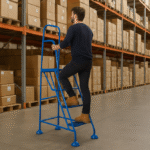
Mobile warehouse steps are by far the most common in UK facilities. These freestanding units feature castors or wheels that allow for easy movement, but once a worker steps on, the ladder’s base locks in place to provide a secure platform. They are available in various heights and configurations, from two-step versions for small stockrooms to heavy-duty ten-step platforms for large-scale warehouses.
Fixed steps, in contrast, are bolted directly to the ground or structure, providing a permanent and incredibly stable solution. They’re ideal for regular access to the same area, such as a mezzanine, raised platform, or machinery maintenance zone. Fixed steps are usually made from robust materials such as steel or aluminium and are often custom-fabricated to fit specific measurements or site layouts.
Podium steps are another excellent option for tasks that require extended working periods at height. They feature enclosed platforms and safety guardrails, making them especially suitable for maintenance teams, engineers, and warehouse staff who need both mobility and protection.
For environments with limited space, such as retail backrooms or narrow aisles, compact or folding steps provide the necessary reach without consuming valuable floor space. These steps can be folded and stored when not in use, offering both convenience and efficiency.
When selecting warehouse steps, there are several key considerations that go beyond just price or size. One of the most important factors is height and reach. The top platform of your steps should ideally allow the user to work comfortably without stretching or leaning. Overreaching is one of the leading causes of workplace falls, so getting the correct height specification is vital.
Next, think about load capacity. Industrial warehouse steps must support both the worker and any equipment or tools they are carrying. Look for models that specify their safe working load (SWL) — typically rated between 150kg and 300kg. For busy warehouses, always choose steps with a higher capacity to ensure long-term durability.
Material choice is another major factor. Aluminium is lightweight, corrosion-resistant, and easy to manoeuvre, making it ideal for general-purpose warehouse environments. Steel offers greater strength and load capacity but is heavier and better suited to permanent installations. Fibreglass, as mentioned earlier, is the go-to choice for electrical safety and non-sparking environments.
You should also pay close attention to safety features. Modern warehouse steps from reputable suppliers like climbit.uk include non-slip treads, guardrails, locking wheels, and handrails for secure ascent and descent. Some advanced models feature spring-loaded brake systems that automatically engage when weight is applied — ensuring stability without manual adjustment.
Finally, consider your floor conditions. Smooth concrete floors can make mobile steps easy to move, but if your warehouse has uneven or sloped surfaces, fixed or wide-based models will provide a more secure setup.
In the UK, warehouse steps and ladders fall under strict safety regulations designed to protect workers at height. The Work at Height Regulations 2005 require employers to ensure that all equipment used for working above ground level is appropriate, well maintained, and used by trained, competent individuals.
Most high-quality warehouse steps comply with the EN 131 standard, which sets out performance and safety criteria for ladders and portable steps used in commercial and industrial environments. Some fixed installations, particularly those used for access to machinery or mezzanine levels, are designed in line with EN ISO 14122, which governs the design of permanent access systems.
When choosing your steps, always check for certification labels or documentation. Reputable suppliers like climbit.uk provide only products that meet or exceed these standards, ensuring your business remains compliant with UK safety laws. Investing in certified equipment not only protects your staff but also safeguards your company from potential legal and insurance issues.
Proper maintenance extends the lifespan of your warehouse steps and ensures consistent safety. All steps — mobile or fixed — should undergo regular inspections to check for signs of wear, corrosion, or damage. Before each use, encourage employees to perform a quick visual check for cracks, loose fittings, or worn treads.
For mobile steps, particular attention should be paid to the wheels or castors, as debris buildup can affect braking performance. Fixed steps, on the other hand, should be checked for secure mounting bolts and corrosion around welds or joints, especially if they’re used outdoors or in humid environments.
Cleaning is equally important. Oil, dust, and moisture can quickly reduce traction on treads, increasing the risk of slips. A simple cleaning schedule can prevent most of these issues and keep your equipment looking professional.
At Climbit.uk, our warehouse steps are designed for durability, using industrial-grade materials and coatings that stand up to daily use in demanding environments. Still, even the strongest step needs care — and a well-maintained piece of equipment is always safer and more cost-effective over time.
Choosing where to buy your warehouse steps can be just as important as choosing which model to buy. A trusted supplier provides more than just products — they offer expertise, advice, and after-sales support that ensures your investment pays off for years to come.
At Climbit.uk, we don’t believe in one-size-fits-all solutions. We take the time to understand your environment, your workforce, and your safety requirements before recommending equipment. Our range includes everything from mobile warehouse steps and podium platforms to fixed access stairs, all fully certified and built for industrial use.
We also provide transparent product information, load ratings, and compliance details so you can purchase with confidence. Whether you’re fitting out a brand-new facility or upgrading your current setup, we’ll help you select steps that enhance both safety and productivity.
Selecting the right warehouse steps is about more than just meeting safety regulations — it’s about empowering your team to work efficiently and confidently. By carefully assessing your workspace, understanding different step types, and choosing certified equipment, you lay the foundation for a safer, more productive environment.
Remember, the best investment you can make isn’t just in equipment, but in your people. Safe access solutions help prevent injuries, reduce downtime, and build a stronger, more responsible workplace culture.
If you’re unsure where to start, or if you’d like expert guidance on finding the perfect steps for your warehouse, the team at Climbit.uk is here to help. We offer a full range of EN 131-certified warehouse steps, ladders, and platforms — all designed to meet the highest standards of safety and performance.