By Climbit.uk – Experts in Access Equipment, Safety and Industrial Solutions
Whether you’re running a busy distribution centre, factory, or retail warehouse, safe and efficient access to high storage areas is essential. Choosing the right type of steps, mobile warehouse steps or fixed steps can dramatically affect workflow, safety, and productivity.
At Climbit.uk, we supply both mobile and fixed access solutions designed for demanding UK workplaces. In this article, we’ll compare these two popular options side by side, so you can make an informed decision for your business.
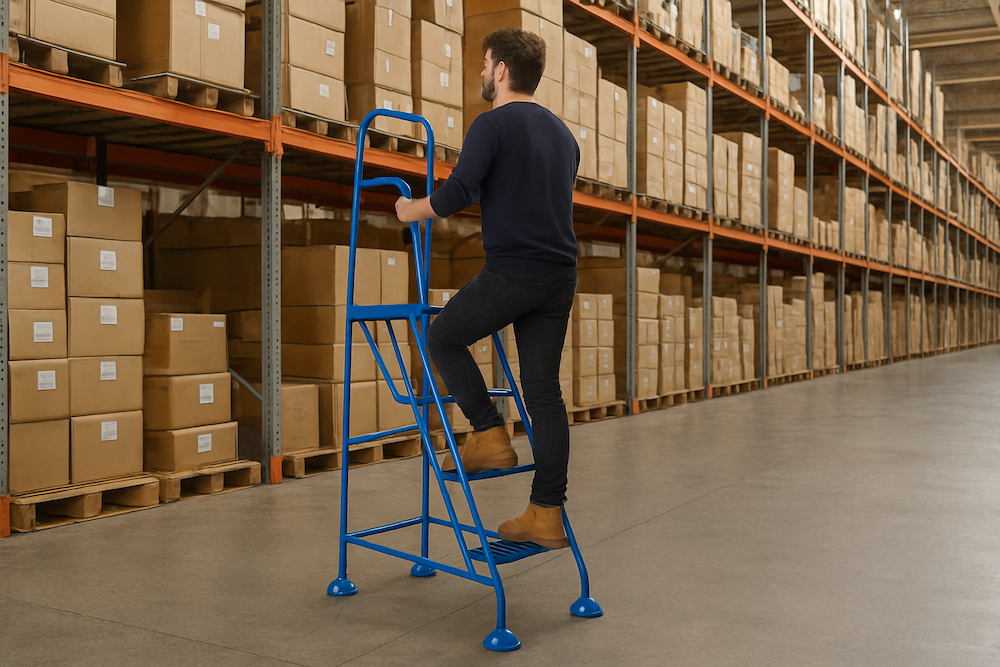
Mobile steps are freestanding units fitted with wheels or castors, allowing them to be easily moved around a workspace.
They often feature:
🪜 Wide, slip-resistant treads
🪜 Handrails and guardrails for safety
🪜 Platform areas for picking or inspection work
🪜 Locking mechanisms to prevent movement during use
Typical uses:
Warehouses, fulfilment centres, manufacturing, and retail stockrooms.
Fixed steps (or static stairs) are permanently installed structures, usually bolted to the floor, wall, or mezzanine.
They can be:
🪜 Custom-built to fit a specific layout
🪜 Made from steel, aluminium, or GRP
🪜 Integrated with handrails and safety cages
Typical uses:
Accessing mezzanines, machinery platforms, or elevated maintenance areas.
One of the biggest differences is movement.
| Feature | Mobile Warehouse Steps | Fixed Steps |
|---|---|---|
| Mobility | Easily moved around using built-in wheels | Permanently installed |
| Flexibility | Can be repositioned as layouts change | Fixed in one location |
| Setup | Ready to use out of the box | Requires installation |
Verdict:
If your workspace layout changes often such as a warehouse with variable picking zones mobile steps are the more versatile choice.
If you have fixed access points (like a mezzanine), fixed steps offer stability and permanence.
Safety should always be the top priority.
Modern designs, like those sold on Climbit.uk, include:
🪜 Locking castors or domed feet that grip the floor when in use
🪜 Handrails and guardrails for fall protection
🪜 Non-slip treads and wide platforms
🪜 Offer maximum stability — bolted directly to the floor or structure
🪜 Ideal for frequent, predictable access points
🪜 Typically rated for heavier loads
Verdict:
Both are safe when used correctly, but fixed steps provide ultimate stability for repeated use, while mobile steps balance safety with convenience.
| Factor | Mobile Steps | Fixed Steps |
|---|---|---|
| Storage | Can be rolled away when not needed | Permanently occupies space |
| Footprint | Compact options available | Custom-built, often larger |
| Suitability | Ideal for shared or multipurpose areas | Best for dedicated access points |
Verdict:
If your warehouse space is limited or constantly changing, mobile steps save valuable floor space by allowing flexible storage.
🪜 Mobile Steps: Require occasional checks on wheels, brakes, and treads. Minimal upkeep otherwise.
🪜 Fixed Steps: Virtually maintenance-free once installed, though subject to wear if outdoors or exposed to chemicals.
Verdict:
For environments with high traffic or heavy-duty use, fixed steps last longer. But mobile steps are easy to service and replace.
| Cost Factor | Mobile Steps | Fixed Steps |
|---|---|---|
| Initial Cost | Lower upfront cost | Higher installation cost |
| Setup | Ready to use | Requires professional fitting |
| Flexibility | Can be moved across departments | One-time installation |
Verdict:
If you want an affordable, ready-to-go solution, mobile warehouse steps win on price and convenience.
For permanent, industrial-grade installations, fixed steps justify their higher investment through longevity.
Both types should comply with UK safety standards such as:
🪜 BS EN 131 for portable ladders and steps
🪜 BS EN ISO 14122 for fixed industrial stairs and platforms
🪜 The Work at Height Regulations 2005
When purchasing, always check for certification and load rating. At Climbit.uk, all our access products meet or exceed EN 131 and UK HSE requirements, ensuring long-term safety and compliance.
Choose Mobile Warehouse Steps if:
✅ Your layout changes regularly
✅ You need access to multiple shelving areas
✅ Portability and flexibility are priorities
✅ You have limited storage or space
Examples: Fulfilment centres, stockrooms, manufacturing, retail backrooms.
Choose Fixed Steps if:
✅ You need permanent access to mezzanines or machinery
✅ You want the most stable and maintenance-free option
✅ You’re installing part of a fixed structure or elevated workspace
Examples: Factories, maintenance platforms, loading bays, roof access.
At Climbit.uk, we offer both mobile warehouse steps and fixed access solutions to suit every environment.
🪜 Popular Mobile Warehouse Steps:
➡️ Heavy-Duty Mobile Steps with Guardrails
➡️ Narrow Aisle Mobile Steps for compact spaces
➡️ Extra-Wide Platform Steps for stock picking
⚙️ Fixed Access Options:
➡️ Custom-built mezzanine access stairways
➡️ GRP or steel fixed steps for industrial applications
➡️ Modular platform systems
Browse the full range today 👉 climbit.uk
If your operation relies on flexibility, fast access, and frequent movement, mobile warehouse steps are the clear winner. However, if you need permanent, heavy-duty access especially at height or for machinery maintenance fixed steps are the safest and most stable option.
In many modern facilities, the best solution is a combination of both:
🪜 Mobile steps for flexible day-to-day operations
🪜 Fixed steps for permanent elevated access points
The right access solution is more than just a tool, it’s an investment in safety, productivity, and compliance.
Whether you choose mobile warehouse steps for versatility or fixed steps for durability, ensure they meet UK standards and are used by trained, competent staff.
At climbit.uk, we’re here to help you find the perfect fit for your business from compact mobile steps to heavy-duty fixed installations.